


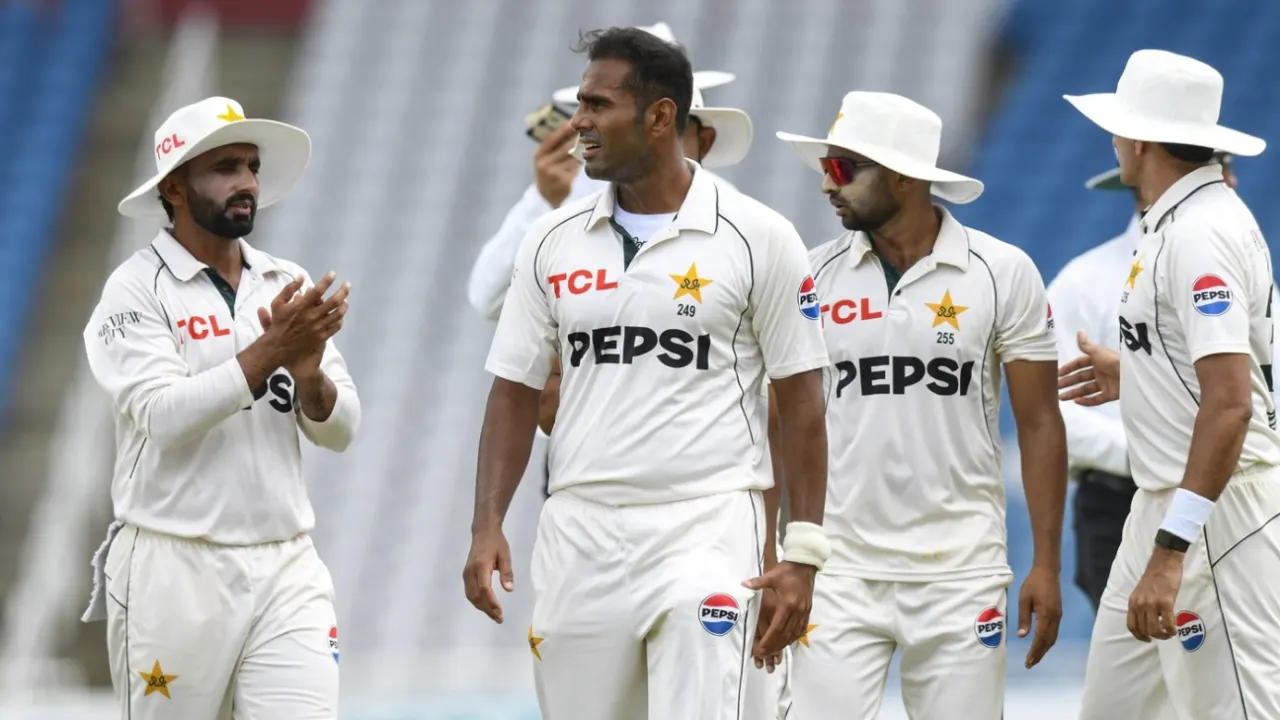
Pakistan fast bowler Mohammad Ali finally received the rewards his disciplined bowling had long deserved, producing a career-best performance to dismantle the West Indies lower order on Day 2 of the opening Test in Tarouba. Returning to the Test side after nearly two years, Ali claimed his maiden four-wicket haul, proving that patience, persistence, and unwavering belief in his method can still triumph in modern Test cricket.
Pakistan Turn the Tide
The morning session had left Pakistan supporters nervous. Shamar Joseph attacked aggressively before lunch, smashing consecutive boundaries and racing to an unbeaten 23 off just 12 deliveries alongside the well-set Shai Hope. Memories of previous collapses in similar situations resurfaced, and another frustrating day in the field seemed possible.
Instead, Pakistan responded in emphatic fashion.
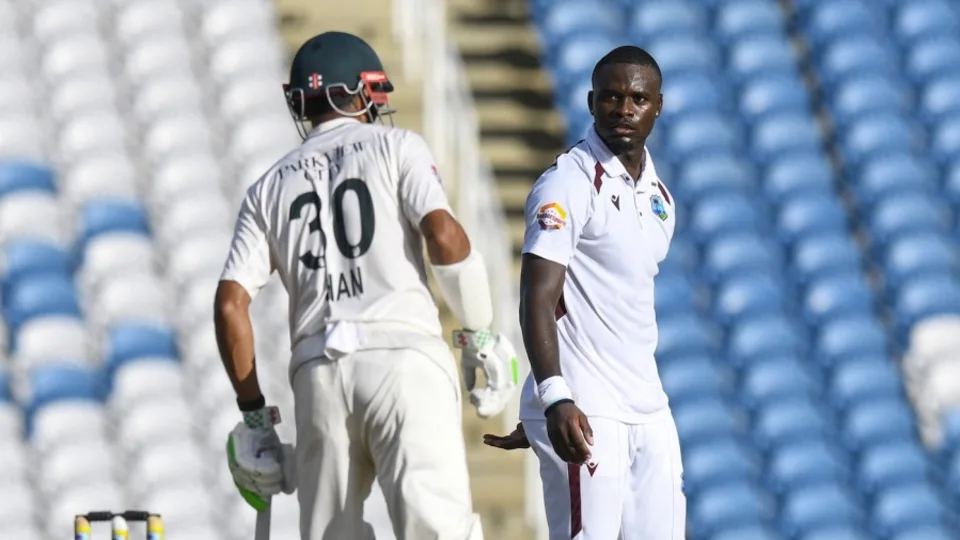
Just 15 minutes after the lunch break, Mohammad Ali transformed the match. He bounced out Joseph early in the session, dismissed the dangerous Hope with a beautifully crafted delivery that jagged back into the stumps, and wrapped up the innings by producing a scorching inswinger that shattered Jayden Seales’ off stump. The spell completed his first-ever four-wicket haul in Test cricket—his finest performance in the format.
A Reward for Years of Hard Work
Ali’s return to international cricket has not been straightforward.
Since making his Test debut in December 2022, he endured two difficult starts to his career. After bowling on batting-friendly surfaces against England’s aggressive “Bazball” approach, he was dropped. A brief recall against Bangladesh was followed by another omission, leaving him with only six wickets at an average above 67 from his first six Tests.
Despite modest international numbers, Pakistan’s selectors continued to value his consistency in domestic cricket.
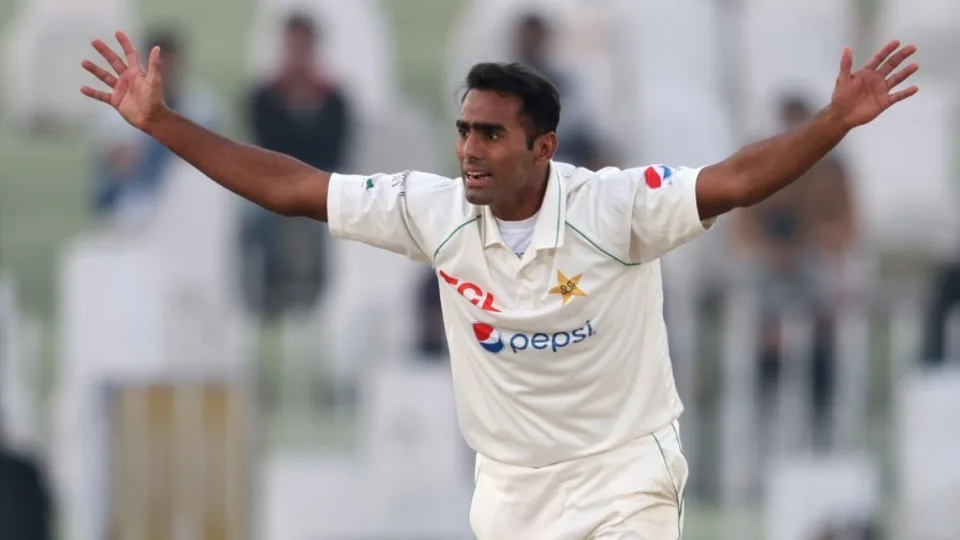
During the 2025-26 domestic season, Ali emerged as one of Pakistan’s standout performers, claiming 51 wickets across the Quaid-e-Azam Trophy and President’s Trophy, finishing as the leading wicket-taker for finalists Sialkot. His relentless performances eventually earned him another opportunity in the national side—and this time, he grabbed it with both hands.
Mastering the Conditions
Ali’s success in Tarouba wasn’t built on express pace but on intelligent bowling.
Recognising that fuller lengths would generate greater movement, Pakistan’s fast bowlers adjusted their plans after Day 1. The change paid immediate dividends.
“We discussed that we needed to bowl fuller because there was more lateral movement available today,” Ali explained after the day’s play.
Using both conventional swing and seam movement, Ali consistently challenged the West Indies batters by creating different angles from the crease. His natural outswing tempted batters into driving, while the occasional delivery nipping back into the stumps kept them uncertain throughout his spell.
The Battle with Shai Hope
The contest between Mohammad Ali and Shai Hope became one of the defining moments of the innings.
Ali repeatedly tempted Hope with deliveries moving away outside off stump before eventually surprising him with one that came back sharply. The strategy was deliberate. Earlier in the innings, Hope had survived a dropped chance, but Ali refused to abandon his plan.
Eventually, persistence prevailed.
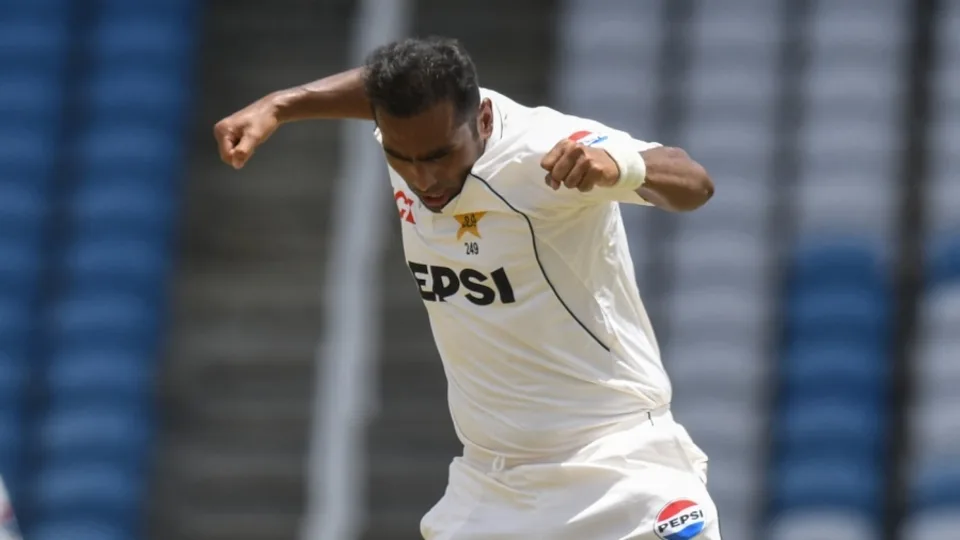
“Shai Hope’s wicket was the most important for me,” Ali said. “He was scoring freely and another 20 or 30 runs could have taken the game away from us.”
The breakthrough not only ended Hope’s superb innings of 92 but also broke the backbone of the West Indies resistance.
Experience Built in Domestic Cricket
One factor that benefited Ali was Pakistan’s recent decision to use the Dukes ball in domestic first-class competitions—the same ball used during the Test series in the Caribbean.
That experience allowed him to understand how to exploit the conditions effectively, generating movement both in the air and off the surface regardless of the age of the ball. Rather than relying purely on pace, Ali showcased the value of control, discipline, and tactical awareness.
Faith in the Process
Despite going wicketless on the opening day after bowling impressively, Ali never allowed frustration to affect his rhythm.
Having spent years honing his craft in Pakistan’s first-class system, he trusted that maintaining consistent lengths would eventually bring rewards.
“When you’re bowling well, you simply have to stay patient and keep making life difficult for the batters,” he reflected.
That philosophy was perfectly demonstrated on Day 2, as disciplined bowling eventually translated into match-changing wickets.
A Timely Statement
With Pakistan beginning to look beyond experienced names like Shaheen Shah Afridi and Hasan Ali, Mohammad Ali’s performance could not have come at a better time.
His four-wicket haul was more than just a personal milestone—it was a reminder that traditional red-ball specialists still have an important role in Pakistan cricket. Through resilience, domestic excellence, and unwavering belief in his process, Mohammad Ali has reignited his Test career and provided Pakistan with another reliable option in their fast-bowling attack.
If this performance is any indication, the 32-year-old may finally be receiving the recognition his red-ball skills have long deserved.